
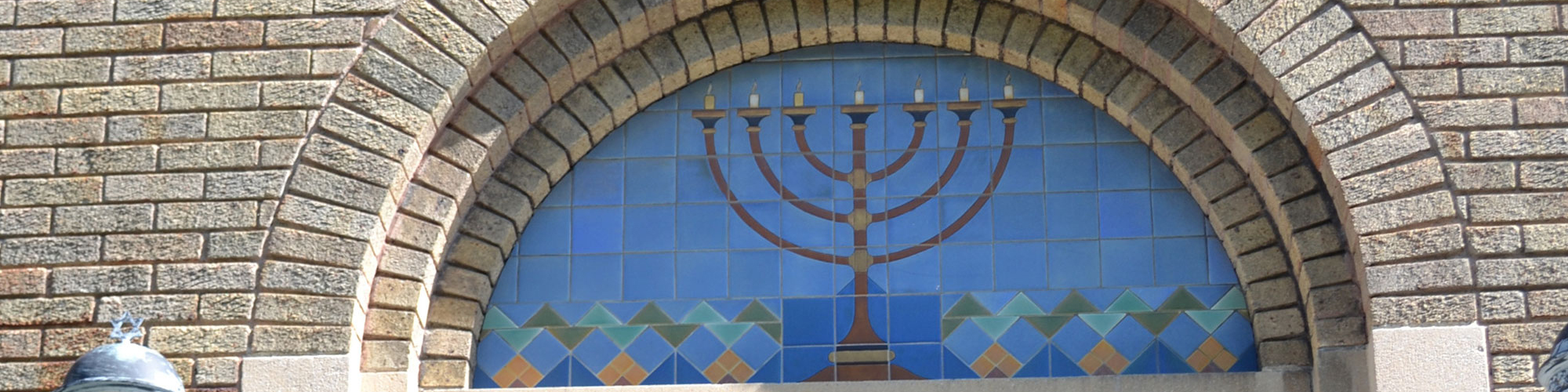
The Jewish community of Ithaca has two roots: Jewish merchants and peddlers in the mid-to-late 19th century, and the later arrival of Jewish students and faculty at Cornell University and Ithaca College.
Table of Contents
Early History
Jewish organizational life began in 1900 with the Ladies Aid Society, which later became the Ladies Auxiliary of a temple that was not yet founded. The Ladies Auxiliary became the Hebrew Women’s Aid Society, which later turned into the Sisterhood of Temple Beth-El. The Ladies Aid Society, founded to supply a dowry, aided both Jews and gentiles. A 1915 photo shows a Sunday school class of 32 students and six teachers.
The first Jewish congregation in Ithaca was organized at the home of Isador Rocker. Seventeen men attended. The congregation described itself as “modern” or “liberal” but intentionally avoided calling itself Reform. The first Torah was dedicated by Professor Nathaniel Schmidt, a professor of Semitic languages at Cornell. Schmidt was not Jewish, but often gave his services to the Sunday school sponsored by Daniel Rothschild. Students from Cornell also taught at the Sunday school. Professor Schmidt had come to Cornell via Colgate, where he was fired for his “ungodliness” after becoming interested in Ethical Culture. At the Torah dedication, Professor Schmidt is said to have stated that the “only regret that I have is that I was not born a Jew.”
Split and Merge: From the 50 families, the dissenters organized a more strictly orthodox congregation under the name of Agudath Achim. The two groups merged (though not fully until 1941) on June 4, 1924, under the name Temple Beth-El. As stated in the Certificate of Incorporation (August 20, 1924), the purpose of the new society was for the “social, religious and mutual improvement of members, and for the purpose of providing interment and funeral of deceased members in accordance with the Jewish rites and ceremonies.” Rabbis from one of the theological seminaries were invited in for the High Holy Days, and services continued to be held in hired halls.
Cemetery: Headstones show the first Jewish burials in 1856. At the end of the 19th century, more land was purchased in the City Cemetery for Jewish burials, and eventually, land was purchased at Lakeside. A deed was given to Temple Beth-El in 1933.
Land and Building: On February 10, 1925, the congregation purchased the first plot from Daniel Rothschild, and six months later, an adjacent lot was acquired. Since the synagogue was meant to fill the needs of both the town and university students and faculty, and since it was thought, correctly, that even gentiles would be interested in building a synagogue, the fundraising net was spread to students and their families, individuals and congregations in New York City, Rochester, Syracuse, Elmira, and around the country, as well as local community leaders. The project brought together the president of Cornell University, the vice-president of the First National Bank of Ithaca (who was the first Temple Beth-El treasurer and whose wife was Jewish), Robert H. Treman, and local clergymen. Eli Goldstein, a Buffalo architect and Cornellian, offered his services free of charge. Ground was broken on July 17, 1928, and on February 4, 1929, Temple Beth-El opened its doors. Before that, services were held in private homes, rented halls, and the Moose Lodge. Professor Schmidt was again called upon to dedicate the new Torah. Fortunately, the Temple was built just before the start of the 1929 Depression. Subsequently, many people were not able to meet their pledges until much later, if at all.
First Rabbi/Cornell Hillel: In the spring of 1929, Cornell Jewish students urged Hillel to center its activities at Temple Beth-El to facilitate their integration into the campus community. Given the dire financial situation of Temple Beth-El, a newly established Hillel, they decided to “share” a rabbi. Rabbi Isidor Hoffman, a graduate of the Jewish Theological Seminary and a former congregational rabbi in Utica, New York, became the first Hillel director at Cornell and the first rabbi at Temple Beth-El. The first bar mitzvah and wedding were celebrated in the new building in 1929.
Second Split and Merger: Shortly after the synagogue’s opening, Temple Beth-El faced a crisis. Orthodox congregants again broke away and established a separate congregation, named Agudat Achim. One congregation met upstairs and the other in the vestry. The congregations rejoined in 1942.
1942 to 1970s
This period is marked by significant growth in the Jewish population of Ithaca, Temple membership, enrollment in the Hebrew school, building expansion, and inauguration of the first full-time rabbi, along with increased membership from Cornell and Ithaca College professors and staff. The mortgage was paid off in 1952. By 1955, the Temple’s membership had grown to over 100 families.
During this period, Jews came to Ithaca from many places. Holocaust survivors Jake and Jeanette Geldwert (who survived the camps) opened a small grocery store, and Dr. David Abisch, his wife Martha, and their daughter Rita (who escaped to Shanghai) opened a medical practice in Newfield. Rita is an active member. Most members migrated from nearby cities, came to Cornell or Ithaca College as professors, or came as students and stayed. This is still true today.
In contrast to earlier decades, the 1950s and 1960s saw Ithaca Jews include doctors, lawyers, dentists, pharmacists, teachers, nurses, and other professionals. But Jewish-owned businesses still predominated: stores that sold fabric, shoes, clothing, furs, liquor, furniture, and cigars, an army and navy store, junk dealer, scrap metal dealer, pharmacy, and jewelers. Jewish merchants and professionals from the 1950s to the 1970s dotted Ithaca’s downtown. They joined with their fellow businessmen and professionals at the Yacht Club and Country Club, once those establishments began accepting Jews as members after World War II, as well as the Elks, Masons, Chamber of Commerce, and Rotary. For those who were merchants, business was essential to their lives; they did not close their stores on Shabbat, though a few did for High Holidays. Identity as Jews was important, but so was identity as Americans. In the 50s and early 60s, the Temple had special services for Veterans’ Day and Armistice Day.
Religious and Educational Life
Rabbis and School: Until Rabbi Glass was named as our rabbi in 1976, the Temple was served by a succession of rabbis with some gaps.
Rabbi Isadore D. Passow became the first rabbi to exclusively officiate at Temple Beth-El. On hand to greet the new rabbi were Mayor Comfort, local Supreme Court Justice Riley Heath, President of Cornell University Ezra Day, several pastors, and the director of Hillel at Cornell.
Rabbi Rudavsky (1947–52) established continuity and became deeply involved in the life of the congregation and religious school. He also introduced a choir for services and guest speakers for the after-services.
Rabbi Felix Aber (1952–60) made the most important mark before Rabbi Glass. Rabbi Aber started Saturday morning services. Our religious school bears his name.
The religious school thrived under the direction of succeeding rabbis, along with teachers from Cornell and the community. In 1969, during a period when there was no rabbi, Rachel Siegel took over as director. Her words poignantly expressed the objectives of Temple Beth-El’s religious school: “We can only skim the surface of a real Jewish education. But we can …introduce your children to the richness of the Jewish experience, to the values of Torah and learning, to the uniqueness of the Jewish people, to the responsibilities of one Jew to another, of one human being for another.” The purpose of Jewish education at Temple Beth-El, was to “build a strong Jewish identity and to prepare students for Jewish communal life.” Ben and Rachel Siegel established the Rabbi Aber Memorial Campership to give young people the opportunity to interact with Jewish youth from other communities and develop leadership skills at the local and regional levels.
The growth of the congregation and Hebrew school necessitated more classroom space. The Temple purchased an adjacent house where some classes were held, raised $130,000, and after four years of classes in St. Paul’s United Methodist Church, Temple Beth-El congregants and students welcomed the completion of the much-needed addition. On May 23, 1969, the new school was officially named the Rabbi Felix Aber Religious School. On October 20, 1979, the Temple’s second mortgage was burned through the generosity of a matching grant from Maury Wallace and the ingenuity of Joe Regenstein.
Organizational Life: A number of adult organizations affiliated with Temple Beth-El from the 1940s through the 1960s, offering opportunities to non-members of the synagogue to give their energies to Jewish-related activity and to members another outlet for immersing themselves in Jewish life. Sisterhood has been the most active and continuous organization. There were also active Hadassah, Rothschild B’nai B’rith Lodge, Men’s Club, the Zionist Organization of America, and adult study groups. Similarly, opportunities for youth included Young Judaea, B’nai B’rith Youth, and United Synagogue Youth (USY).
Sisterhood: The Hebrew Women’s Aid Society joined the National Council of Jewish Women in 1924. Once TBE was formed the group renamed itself the Women’s Auxiliary of Temple Beth-El. Finally, in 1940, it affiliated with the National Women’s League of United Synagogue and became the Sisterhood of Temple Beth-El, with its goals of subsidizing the religious school, sponsoring educational and social programs for the women of the Jewish community, and helping in the celebration of Jewish holidays for the Hebrew school and for the congregation. Sisterhood has always been responsible for the Temple kitchen, the Judaica shop, and the general support of the congregation. The Sisterhood also served as a bridge to the non-Jewish community (Meals on Wheels, Ithaca Council of Church Women). Like elsewhere, their image began to change in the 1960s. Carrie Regenstein, Sisterhood president, described how the goals and implementation shifted in light of more women entering professional careers. Meetings, education and social events were held in the evening and board meetings were moved from individual homes to the Temple itself. Child care was offered for the first time during the High Holidays. By the mid-1980s, the Temple By-Laws were adapted to permit a substitute for the Sisterhood President to vote in her stead at Board meetings since she was already leading the Sisterhood Board meeting each month. To this day the Sisterhood president is the only one obligated to two meetings a month.
B’nai B’rith: The B’nai B’rith Men’s Club was formed in 1941 as the Daniel Rothschild Lodge. In 1971, the chapter affiliated with the National Federation of Jewish Men’s Clubs, from which it disaffiliated in 1977 for the national federation’s lack of services. B’nai B’rith nationally became less and less popular, men and women locally and nationally increasingly socialized together; at some point the local chapter dissolved. Its successor, the Ralph Marvin Men’s Club, is not currently active.
Hadassah: Hadassah was founded here in 1943 to support medical care and research for the Jewish community in Palestine and later in the state of Israel. From a beginning membership of 22 it surged to 150 members by the mid-1970s. Hadassah was especially important as a way for Jewish women who were not members of the Temple to express their identity, although many Temple members also belonged. It is no longer locally active; members’ time has been increasingly stretched thin across all volunteer activities.
Zionist Organization of America: Active in the late 1940s and 50s, they sponsored speakers, organized food drives, and sent money to plant trees.
Adult Study Group: Topics included Moses Mendelssohn, Hermann Cohen, Martin Buber, and a discussion of important biblical figures.
Ithaca Jewish Welfare Board: Now Ithaca Area United Jewish Communities. https://iaujc.org
Rabbi Glass’s Tenure: Important Issues and Highlights
Rabbi Scott L. Glass was installed in September 1976. U.S. Congressional representative Matt McHugh, among other notables, was present.
March 16, 1978 – Dedication of a Torah scroll, complete with a parade through downtown Ithaca.
Women in the Temple Service: The issues of women being counted in the minyan and having aliyot preceded Rabbi Glass’s tenure. The questions had been brewing for at least two years. At the end of 1977, the congregation created an ad hoc committee to study the issues from the perspective of Halacha, what other Conservative congregations were doing, and the feelings of the congregation. Fortunately, the RA had already ruled that Jewish women could be counted toward a minyan and called for aliyot if the congregational rabbi approved. Once settled in, on August 8, 1978 Rabbi Glass reported to the Temple Board a compromise. Women would be counted in the congregational minyan two weeks a month, unless they didn’t want to be counted, and that there would be a gradual implementation of women being offered aliyot. Initially, women would be called to the Torah two weeks a month and for special occasions like bone mitzvahs and aufrufs. This compromise reflected both Halacha and the feelings of many in the congregation. The compromise system only lasted a few years to give everyone time to adjust. From then on, a bat mitzvah could celebrate her special day at the Saturday morning service where she could have an aliyah and read from the Torah. Perhaps the final seal for women’s equality came when Carrie Regenstein became the first woman president of the Board of Trustees in 1992.
Interfaith Activities: Interfaith efforts have always been an important part of our synagogue life. Non-Jews contributed their time and money to help fundraise for the building of the synagogue. At rabbinic installations and holidays, mayors and other town notables have been on hand. When Rabbi Glass first came, Rabbi Morris Goldfarb, the long-time Hillel director, brought him to meet local clergy. From then on Rabbi Glass has dedicated himself to TBE’s involvement in inter-faith activities and has built special friendships with local clergy. Under Rabbi Glass’s leadership, the Temple has been involved with, and often hosted, the yearly Area Congregations Together Multi-faith Thanksgiving Service. In 1987, Rabbi Glass was elected president of the Tompkins County Religious Workers Association.
Antisemitism: Overt anti-Semitism has been rare, but it has existed. Leo Frank—lynched in Atlanta in 1915—was a Cornell graduate. Enrollment and employment at Cornell were restricted. Older members remember when the Country Club and Yacht Club were closed to them. Rentals could be limited in the 1940’s. The most notorious local episode of anti-Semitism occurred in 1982 when both the Temple and Rabbi Glass’s house were desecrated with anti-Semitic slogans and a swastika. Rabbi Glass notified the Temple president and the Anti-Defamation League. The Ithaca Times reporter wrote, “This kind of ugly reminder of the vulnerability of even enlightened communities to display the basest prejudice” also surfaced in the fall of 1979 when “unknown pranksters went on a swastika-daubing spree downtown, starting at Rothschild’s Department Store and ending at Temple Beth-El.” Ku Klux Klan graffiti was also painted that evening on Ujamaa, then Cornell University’s black living center. Rabbi Glass felt especially violated and frightened for his family, but was moved by the rallying of Christian leaders to protest these desecrations, demanding police protection and offering to help in any way they could. Indeed, their response is credited for ending the threats. “Religious leaders of the Christian community respond powerfully bringing an end to the threats.”
In October 2018, TBE experienced a similar response after the Tree of Life massacre when police guarded our building for the Sunday session of Religious School and the Sunday community prayer gathering.TBE received an abundance of letters from clergy, organizations, and government officials, condemning the hate and offering their support in any way needed, including offering themselves as guards. The Presbyterian Church assembled a procession with bagpipes from their church to our building that Sunday morning to give us consolation and strength.
Religious Life and Hebrew School: For many years, Rabbi Sharon Glass and a succession of community members led the religious school. In 2010, a full-time position for religious school and youth director was established. Rabbi Glass continues to teach the b’not mitzvah students and has taught the post b’nei mitzvah class. It is a tribute to him that many students continue to want to learn after their b’nei mitzvah. We have services on all Jewish holidays, Shabbat (Friday night and Saturday), and a daily minyan. We almost always have a minyan at all services. We have a full service Hevra Kaddisha, started in the 1980s.
Before Rabbi Glass came, there was a movement away from the Temple-sponsored religious school. Some were disenchanted with the teaching and curriculum and wanted shorter instructional time. They formed the “Ithaca Association for Jewish Studies.” In March 1978, the directors met with Rabbi Glass to discuss joint programming. Eventually, many people from IAJS joined the Temple and began sending their children to the Temple religious school. IAJS eventually dissolved, but our membership includes several alumnae.
Cornell University, Ithaca College, and Hillels: Cornell University and Ithaca College remain very important to the congregation today. Not only does their faculty enhance our membership, but the programs on Jewish themes offered by Cornell and Ithaca College also draw congregants and enrich our cultural and intellectual lives. Some students from Cornell and Ithaca College attend High Holiday services at TBE and students also serve as our Hebrew School teachers. At Cornell, both Rabbi Morris Goldfarb and later Rabbi Larry Edwards served as Hillel rabbis for decades and contributed actively to the community. A Celebration honoring the retirement of Rabbi Morris Goldfarb as Director of Cornell Hillel, after 32 years of service, was held in November 1979. It is his father’s tallit wrapped around our Holocaust scroll. At Ithaca College, Michael Faber served as Hillel director for twenty-five years. He has contributed to Temple Beth-El as a member and chants Eichah for us on Tisha b’Av.
Recent Growth
In 2001, we purchased the house next door. Dating from 1914, it had been home to five generations of the Hassan family. In March 2001 we broke ground (snow) and in October 2002 we dedicated the annex, which houses the Rabbi Scott Levi Glass Education & Program Center, offices for our rabbi and secretary, a mikveh, Sisterhood Gift Shop, Hecht library, Rubinstein chapel, youth lounge, board room, small kitchen and dining room, bedroom, attic and basement storage, courtyard, entrance ramp, elevator and 2 off street parking spaces. This has allowed a tremendous increase in program offerings, often simultaneously. Sundays include morning Minyan and several adult classes, while later in the day we host square dancing and committee meetings, and often someone is baking or cooking for youth groups, a Shabbat dinner, or Sisterhood Purim baskets.
In 2010, after a series of exploratory meetings with the congregation, we hired our first full-time director of education and youth programming. In 2014, we welcomed Rabbi Suzanne Brody into this position.
Special Events and Initiatives
- Spring 1980 – Rabbi Glass is named chair of the hospital Chaplain Support Committee and in 1992, Rabbi Glass begins serving on the Advisory Board of the Durham Trust for the Hospital Chaplaincy. The hospital’s chaplain office is now fully staffed, including Rabbi Tziona Szajman.
- April 1, 1990 – Community Reception and Brunch. We hosted the greater Ithaca community to tour our building, hear about our liturgy, attend panels on kosher food, intermarriage, American Jews, Israel and Jewish life in Ithaca and then enjoy a brunch of traditional foods.
- Fall 1993 – Holocaust Memorial is installed, including Torah scroll from the Westminster Trust.
- March 25, 2001 – Rabbi Glass 25th anniversary Safam concert at Statler Auditorium, Cornell University.
- July 1, 2001 – Office secretary Jane Griffiths begins her employment.
- June 18, 2003 – First conversions in Temple Beth-El mikveh.
- September 2003 – Began hosting Gan Shalom, now B’Yachad, Ithaca Jewish Preschool.
- September 2004 – Eileen Yagoda and Judy Dietz establish the Necessities for our Neighbors campaign.
- Spring 2007 – Establishment of the Bebe Hoffman Memorial Garden.
- July 2008 – Temple Beth-El treasurer signs Living Wage agreement.
- Spring, 2010 – The Social Action and Community Outreach committee began providing bag lunches to the Friendship Center.
- March 2, 2011 Unity Tour – Neshama Carlebach and the Green Pastures Baptist Choir at the State Theatre.
- May 8–9, 2011 – “From Tolerance to Relationship” Rabbi Jack Moline and Reverend Greg Mobley interfaith dialogue hosted by First Congregational Church and Temple Beth-El.
- March 25, 2012 – Sing a New Song: Spiritual Voices of Ithaca. Eight local choral groups performed, including the Dorothy Cotton Jubilee Singers, Ithaca Gay Men’s Chorus, Cornell Filipino Rondalla, Voices of Calvary, Ithaca Inter-Church Choir, and Voices Multicultural Chorus.
- September 9, 2012 – About 150 volunteers from TBE participate in the Feed My Starving Children Mobile Pack at the First Congregational Church, now an annual event.
- May 18, 2014 – Temple Beth-El 90th Anniversary – Morning Community Service Projects and Evening of Reminiscences.
- March 5, 2015 – Sisterhood bylaws updated to offer membership to all spouses, partners and close family members of TBE members.
- Summer 2015 – Jewish Film Festival, now an annual event.
- July 2016 – Radon mitigation system installed.
- September 2016 – Dedication Pardes Hannah through the generosity of P. A. and Elliot Rubinstein.
- 2015–17 – Rabbi Glass’s 40th Anniversary Lecture Series: Rabbi Bradley Shavit Artson, Rabbi Jack Moline, and local scholars’ and rabbis’ talks on Cantor Josef Rosenblatt, Anti-Semitism in Europe, the 21st Century Rabbinate, The Meaning of Chosenness, the Politics of Kashruth, Salomone Rossi, Israeli Society through Literature, and Muhammad the Last Prophet.
- February 2017 – Interfaith trip to Israel led by Rabbi Scott and Sharon Glass.
- March 19, 2017 – Gathering with the Islamic Cultural Outreach Services. We held a mincha service, and they conducted their prayer service, followed by discussion and refreshments.
- May 2017 – Complete kitchen renovation. Ithaca Festival Parade passes our doors Erev Shabbat; we host a dinner and viewing before services.
- June 2017 – Our current custodian, Don King, begins his employment.
- June 25, 2017 – Congregational vote to ratify the constitution to allow space in the designated portion of our cemetery for non-Jewish family members for burial. Passed unanimously.
- Summer 2017 – Temple Beth-El hosts Soul Train Summer Camp.
- High Holidays 2017 – Hire a professional security company for High Holidays, as off-duty police officers are no longer available.
- January 2018 – Temple Beth-El Board establishes a security committee, which continues to review and update our procedures.
- April 2018 – Scholar in Residence weekend with Rabbi Naomi Levy.
- Summer 2018 – Temple Beth-El assumes administration of B’Yachad- Ithaca Jewish Preschool.
- November 2019 – Rabbi Scott L. Glass, emeritus, retires, and Rabbi Miriam Spitzer serves as Interim Rabbi.
Primary Source:
Sandy Gutman, Being Jewish in Ithaca – 1850s to 1980 (35-page document)
Bibliography
- Ithaca Temple Beth-El Records, New York, 1919-2002, #3834, at the Kroch Library, Division of Rare and Manuscript Collections. There are 8 boxes containing Minutes, Bulletins, account books, correspondence, publications, histories of Temple Beth-El and the Ithaca Jewish community, photographs, and obituaries.
- Kramer Family Papers, 1939-2009, #3970, at the Kroch Library, Division of Rare and Manuscript Collections. Includes: family papers, correspondence, diaries, research materials, papers, notes, clippings, and partial articles relating to the history of the Ithaca Jewish community.
- Aber-Morus, Hannah. “The History of Temple Beth-El, Ithaca, New York.” In the Fiftieth Anniversary of Temple Beth-El (1976).
- Goodstein, Anita Shafer, “A History of the Jews in Ithaca”, 1955. Under the auspices of the Ithaca Jewish Tercentenary Committee.
- Rebbitzin Hanna Aber-Morus, 50th anniversary history of Temple Beth-El
- Matt Braun, pictorial history, which still regales our social hall
- Anita Shafer Goodstein, a history of the Jewish community in Ithaca in 1955
- Anne Kramer, a former congregant, has collected documents on the early years of the Temple
Compiled and edited by Nancy Emerson, Rabbinic Search Committee member, February 2019. Any errors are mine.
