
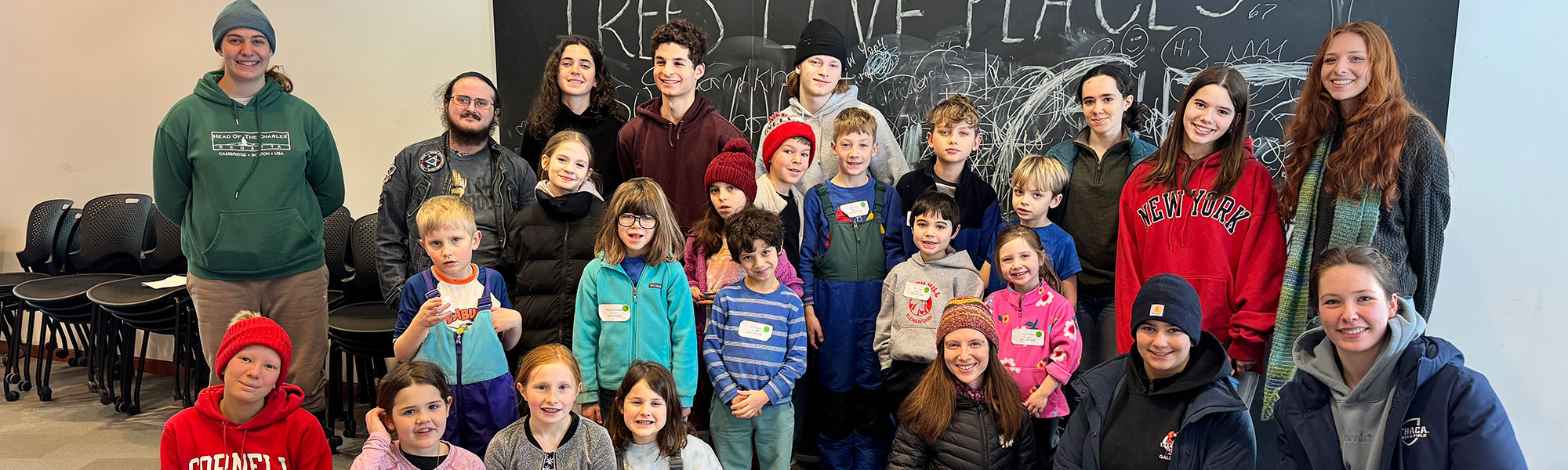
At Temple Beth-El, we believe that Jewish education is a lifelong journey that connects us to our heritage, our community, and our values. Our goal is to provide a rich and meaningful experience for every child, rooted in the traditions of our people while embracing the diversity and uniqueness of each student. We are committed to fostering a warm, supportive atmosphere where all students feel valued, heard, and empowered to explore their Jewish identities.
Our program is designed to reflect and respect the diverse traditions and experiences that our students bring with them into the classroom, as well as the many more diverse traditions that exist throughout the Jewish world. We recognize the importance of embracing the many different families that make up our community, and we emphasize the values of egalitarianism and equality in Jewish ritual life.
To learn more about our religious school program, please reach out to Ellen Cohen-Rosenthal, chair of the Religious School Committee.
Our Programs
Preschool & Pre-K
Nitzanim
Nitzanim (buds) is our monthly program for preschoolers (ages 3 and 4) and their families, offering a joyful introduction to Jewish holidays and traditions. Held one Sunday a month from 9–10 a.m., Nitzanim is a chance for our young families to connect, celebrate, and build community. It also serves as a fun-filled transition into our religious school community, helping children feel comfortable and excited about Jewish learning.
Kindergarten through 7th grade
Gan-Zayin
Classes are held on Sunday from 9 a.m.–12 p.m. for our K-7th-grade students, with students in grades Bet-Zayin (2nd-7th grade) also meeting on Wednesdays from 4–6 p.m.
Our optional Gesher (bridge) program provides students with after-school care from 2–4 p.m. on Wednesdays.
Throughout each school day, students engage in Judaic learning in their classrooms and receive an hour of leveled Hebrew instruction in small groups. Sundays feature a special experiential education period called Avodah, and each day concludes with tefillah led by Rabbi Brommer!
8th-12th grade
Midrasha
Midrasha, our Hebrew high school program for 8th–12th graders, is where Jewish teens from across Ithaca come together to explore, question, and engage with Jewish learning. Meeting Tuesdays from 6–8 p.m., each session begins with a communal dinner before diving into the week’s topic. Rooted in—Midrasha empowers teens to wrestle with Jewish ideas, texts, and traditions in a way that feels personal and relevant.
Review the 2026–27 Family Handbook, which includes this year’s academic calendar.
Frequently Asked Questions
Why should I send my child to TBE’s religious school?
At Rabbi Felix Aber Religious School, we are committed to providing a meaningful, engaging, and inclusive Jewish education for every child. Our program is built on a foundation of inclusivity, ensuring that all students feel welcomed, valued, and supported. We focus on skill-building at every level, particularly in Hebrew and Jewish literacy, so that students gain the confidence and knowledge to fully participate in Jewish life. Our curriculum emphasizes immersion in Jewish texts, encouraging students to engage critically with Torah and rabbinic teachings through creative discussions, debates, and chavruta (partner) study.
Jewish learning at TBE is deeply experiential. Through hands-on tikkun olam (social justice) projects, field trips, and all-school ritual and holiday events, students actively connect with Jewish values, history, and traditions in meaningful and lasting ways. Whether participating in community service, exploring Jewish spaces beyond the classroom, or celebrating holidays together as a school, our students develop a personal and immersive relationship with Jewish life.
A core part of our program is building comfort and empowerment with tefillah (prayer). Through engaging and age-appropriate prayer experiences, students develop the skills, understanding, and confidence to participate in Jewish prayer in ways that feel meaningful to them. Whether leading prayers, exploring the structure and themes of the siddur, or discussing the personal and communal aspects of prayer, we help students cultivate a connection to tefillah that is both accessible and enriching.
Our dedicated and passionate faculty are not only skilled educators but also caring mentors who nurture each student’s Jewish identity. Above all, we foster a warm and welcoming community, where students and families build lasting connections and a strong sense of belonging. Choosing TBE means giving your child a Jewish education that is rich, dynamic, and deeply rooted in tradition and community – we would love to welcome your family!
Why should I send my child to religious school at all?
Sending your child to religious school is a big decision, and there are many reasons for doing so! Some of our families want their children to experience opportunities to explore and question Jewish culture, rituals, texts, and values. Other families hope their children will develop an appreciation for Jewish spirituality, liturgy, and prayer. For others, religious school provides their children with a Jewish framework for engaging with life’s tough questions, while still others view it as a place for their children to develop a positive Jewish identity. Most families are seeking to be part of a Jewish community, for their children and themselves. We would be more than happy to discuss this decision with you. Please contact us to set up a time to speak!
My child is in 5th grade and has never been to religious school before, can they start at TBE now?
Absolutely! Students are welcome to enroll in our religious school at any time. Our leveled approach to Hebrew ensures that all learners progress at their own pace, so your child will be placed in a group that meets them where they are. Additionally, our spiraled holiday and tikkun olam curricula ensure that students are continuously engaging with Jewish traditions, values, and rituals – meaning no one ever “misses out” on key learning. For older students, we work closely with families to support Hebrew decoding skills and ensure preparedness for B’nai Mitzvah.
No matter when your child joins, they will be welcomed into a warm, engaging community where they can build Jewish knowledge and connections!
How many hours a week is religious school?
Our preschool program, Nitzanim, meets once a month on Sundays from 9–10 a.m.
Our Gan (kindergarten) and Aleph (1st grade) students meet weekly on Sundays from 9 a.m.–12 p.m.
Our Bet-Zayin (2nd-7th grade) students meet weekly on Sundays from 9 a.m.–12 p.m. and on Wednesdays from 4–6 p.m. Our optional Gesher (bridge) program provides our Bet-Zayin students with after-school care from 2–4 p.m. on Wednesdays. To get the most out of religious school, especially our Hebrew curriculum, regular attendance is strongly encouraged.
Midrasha (teens 8th–12th grade) meets weekly on Tuesdays from 6–8 p.m. and includes dinner.
What's a typical day in religious school?
Our daily schedule is designed to provide students with a balance of both formal instructional time and experiential learning opportunities that empower them to put their Jewish values and Hebrew language skills into practice.
Sunday Schedule (Gan-Zayin):
- 9-9:15 a.m.: Ma’agal Boker (morning circle), a time for the school to gather to engage in community-building and values-based activities.
- 9:15-10:10 a.m.: Judaics Period in classrooms by grade
- 10:10-10:40 a.m.: Avodah (work or worship), a time for students to engage in service projects led by our teachers and madrichim to take care of the TBE grounds, building, and congregants.
- 10:40-11:30 a.m.: Hebrew Period, students meet in groups determined by skill level
- 11:30 a.m.–12 p.m.: All-School Tefillah (prayer) led by Rabbi Brommer
Wednesday Schedule (Bet-Zayin):
- 4–4:15 p.m.: Ma’agal Tzaharayim (afternoon circle), a time for the school to gather to engage in community-building and values-based activities.
- 4:15–5 p.m.: Hebrew Period, students meet in groups determined by skill level
- 5–5:45 pm: Judaics Period in classrooms by grade
- 5:45-6 p.m.: All-School Tefillah (prayer) led by Rabbi Brommer
Do we have to be a member of the synagogue in order to enroll my child in religious school?
Nope! Everyone is welcome to attend our school. Please note, however, that non-members will be billed a $100 surcharge for enrollment in K-7th grade.
We highly encourage our religious school families to explore synagogue membership, especially as children approach the age of B’nei Mitzvah. New members are offered a dues rate of $180 per household for the first year of membership, and finances are never a barrier to full membership and participation at TBE. To learn more about the membership process, click here.
Can my child come for a visit before I decide?
Of course! We would be more than happy to have your child visit our school to get a taste of what we have to offer. Simply email to set up a visit.
Is religious school enough to prepare my child for their b’nei mitzvah?
Yes, and no. Our curriculum is designed to give students a firm grounding in Jewish life, with emphasis on Jewish texts, rituals, and communal values. We empower our students to take ownership over their learning so that when it comes time to become a Jewish adult, they are ready for the challenge! But while religious school is a great way for students to build their Jewish identity and find a Jewish home, it is not meant to be a one stop shop for everything Jewish. We strongly encourage families to come join us in services on Shabbat and holidays, as well as to make Jewish life a regular part of your home. TBE is invested in supporting you and your family in building a rich Jewish life. Check out our calendar to see what events are coming up soon, or reach out to Rabbi Brommer to talk about how your family can get more plugged into the TBE community.
What does inclusion look like at the RFARS?
At TBE, we are proud to serve students across multiple lines of difference. Our staff and faculty are committed to ensuring that Religious School is a safe and affirming space for all our students and that children are given the tools they need to engage fully in Jewish learning.
To support all learners, every classroom is equipped with fidgets and clear guidelines for their use. Students are also encouraged to take regulatory breaks to help them stay focused and engaged. Our curriculum is designed to encourage differentiation, and we partner with Matan, a Jewish disability-justice nonprofit, to provide professional development for our faculty.
If your child has an individualized education program (IEP) or requires other specific accommodations, please reach out so we can work together to meet their needs effectively.
2026–27 Tuition Rates
- Nitzanim – $75 for all participants
- Gan (Kindergarten) and Aleph (1st grade) – $650 for members, $750 for non-members
- Bet-Zayin (2nd–7th Grade) – $950 for members, $1,050 for non-members
- Gesher (for Bet-Zayin students only) – $350 for members, $450 for non-members
- Midrasha – $400 for all participants
Please note that non-member families will be billed a $100 surcharge.
Member families receive a 10% discount on tuition for every additional child enrolled in K–7th grade.
Financial Aid Policy
At TBE, we are committed to ensuring that every child in our community has access to a quality Jewish education. We believe that finances should never be a barrier to participation in our religious school, and we are dedicated to supporting our families in ways that uphold the dignity, privacy, and trust of all involved. Our approach to financial aid is rooted in the Jewish values of tzedakah (righteous giving) and kavod (respect), reflecting our commitment to creating an inclusive and supportive community.
We are committed to meeting the demonstrated financial needs of all families seeking assistance with their child’s religious education. We recognize the sensitivity of financial matters and therefore do not require families to disclose financial documents, such as tax returns, or other sensitive personal information as part of the financial aid application process. Instead, we trust that the information families provide in their requests will be sufficient for us to make informed decisions. Our aim is to make the financial aid process as accessible and respectful as possible, maintaining the highest standards of confidentiality and care.
To review our financial aid policy and procedures, please click here. Please do not hesitate to reach out to our school director with any questions or concerns.
